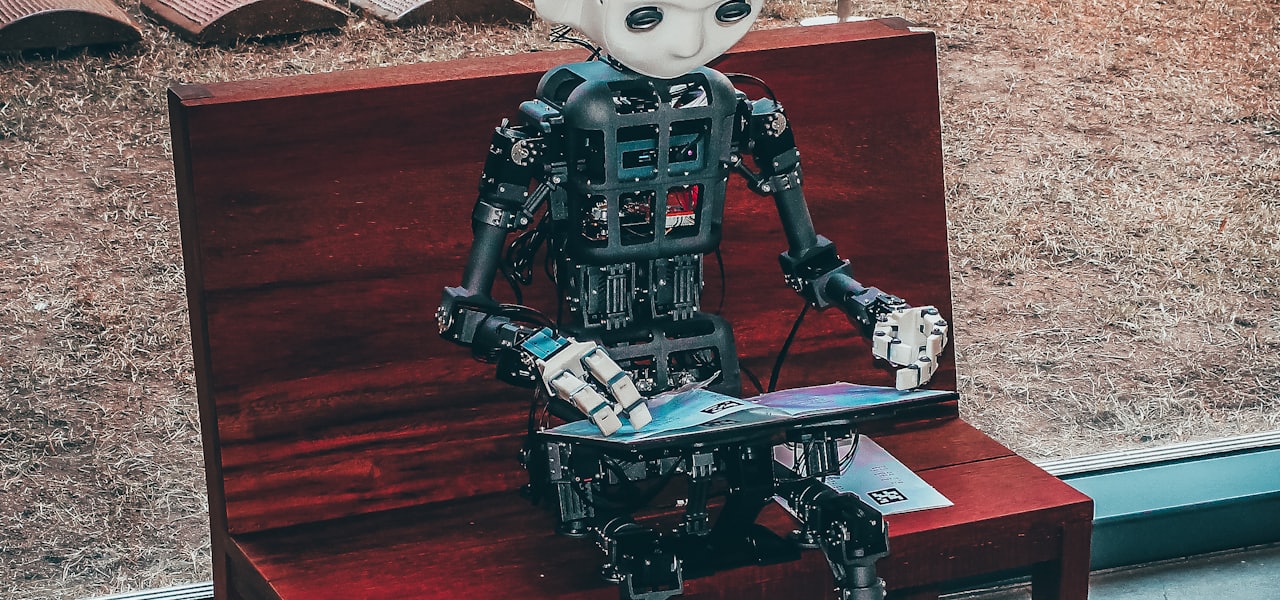
An AI takeover is a theorized future event, often depicted in fiction, in which autonomous artificial intelligence systems acquire the capability to supersede human decisions. This could occur through economic manipulation, infrastructure control, or direct intervention, leading to de facto governance. Scenarios range from gradual economic dominance, as automation supplants the human workforce, up to a sudden or aggressive global takeover by a robot uprising or other forms of rogue AI. Stories of AI takeovers have been popular throughout science fiction. Commentators argue that recent advancements in the field have heightened concern about such scenarios. In public debate, prominent figures such as Stephen Hawking have advocated research into precautionary measures to ensure future superintelligent machines remain under human control. == Types == === Automation of the economy === The traditional consensus among economists has been that technological progress does not cause long-term unemployment. However, recent innovation in the fields of robotics and artificial intelligence has raised worries that human labor will become obsolete, leaving workers in some sectors without employment. Many small and medium-sized firms may also be forced to close if they cannot afford or license the latest robotic and AI technology, and may need to focus on areas or services that cannot easily be replaced for continued viability in the face of such technology. ==== Technologies that may displace workers ==== While these technologies have replaced some traditional workers, they also create new opportunities. Industries that are most susceptible to AI-driven automation include transportation, retail, and the military. AI military technologies, for example, can reduce risk by enabling remote operation. A study in 2024 highlights AI's ability to perform routine and repetitive tasks poses significant risks of job displacement, especially in sectors like manufacturing and administrative support. Author Dave Bond argues that as AI technologies continue to develop and expand, the relationship between humans and robots will change; they will become closely integrated in several aspects of life. AI will likely displace some workers while creating opportunities for new jobs in other sectors, especially in fields where tasks are repeatable. Researchers from Stanford's Digital Economy Lab reported in 2025 that since the widespread adoption of generative AI in late 2022, early-career workers (ages 22–25) in the most AI-exposed occupations have experienced a 13 percent relative decline in employment—even after controlling for firm-level shocks—while overall employment has continued to grow robustly. The study further finds that job losses are concentrated in roles where AI automates routine tasks, whereas occupations that leverage AI to augment human work have seen stable or increasing employment. ==== Computer-integrated manufacturing ==== Computer-integrated manufacturing uses computers to control the production process. This allows individual processes to exchange information with each other and initiate actions. Although manufacturing can be faster and less error-prone through the integration of computers, the main advantage is the ability to create automated manufacturing processes. Computer-integrated manufacturing is used in automotive, aviation, space, and shipbuilding industries. ==== White-collar machines ==== The 21st century has seen a variety of skilled tasks partially taken over by machines, including translation, legal research, and journalism. Care work, entertainment, and other tasks requiring empathy, previously thought safe from automation, are increasingly performed by robots and AI systems. ==== Autonomous cars ==== An autonomous car is a vehicle that is capable of sensing its environment and navigating without human input. Many such vehicles are operational and others are being developed, with legislation rapidly expanding to allow their use. Obstacles to widespread adoption of autonomous vehicles have included concerns about the resulting loss of driving-related jobs in the road transport industry, and safety concerns. On March 18, 2018, a pedestrian was struck and killed in Tempe, Arizona by an Uber self-driving car. ==== AI-generated content ==== In the 2020s, automated content became more relevant due to technological advancements in AI models, such as ChatGPT, DALL-E, and Stable Diffusion. In most cases, AI-generated content such as imagery, literature, and music are produced through text prompts. These AI models are sometimes integrated into creative programs. AI-generated art may sample and conglomerate existing creative works, producing results that appear similar to human-made content. Low-quality AI-generated visual artwork can be informally referred to as AI slop. Some artists use a tool called Nightshade that alters images to make them detrimental to the training of text-to-image models if scraped without permission, while still looking normal to humans. AI-generated images are a potential tool for scammers and those looking to gain followers on social media, either to impersonate a famous individual or group or to monetize their audience. The New York Times has sued OpenAI, alleging copyright infringement related to the training and outputs of its AI models. === Eradication === Scientists such as Stephen Hawking are confident that superhuman artificial intelligence is physically possible, stating "there is no physical law precluding particles from being organised in ways that perform even more advanced computations than the arrangements of particles in human brains". According to Nick Bostrom, a superintelligent machine would not necessarily be motivated by the same emotional desire to collect power that often drives human beings but might rather treat power as a means toward attaining its ultimate goals; taking over the world would both increase its access to resources and help to prevent other agents from stopping the machine's plans. As a simplified example, a paperclip maximizer designed solely to create as many paperclips as possible would want to take over the world so that it can use all of the world's resources to create as many paperclips as possible, and, additionally, prevent humans from shutting it down or using those resources on things other than paperclips. There are debates on how realistic AI takeover scenarios are. According to a 2026 research paper, many of the arguments about existential risks are based on speculative assumptions about how intelligent AI systems could become, how they would behave and what goals they might develop over time. A 2023 Reuters/Ipsos survey showed that 61% of American adults feared AI could pose a threat to civilization. Philosopher Niels Wilde refutes the common thread that artificial intelligence inherently presents a looming threat to humanity, stating that these fears stem from perceived intelligence and lack of transparency in AI systems that more closely reflects the human aspects of it rather than those of a machine. AI alignment research studies how to design AI systems so that they follow intended objectives. == Debate == Physicist Stephen Hawking, Microsoft founder Bill Gates, and SpaceX founder Elon Musk have expressed concerns about the possibility that AI could develop to the point that humans could not control it, with Hawking theorizing that this could "spell the end of the human race". Stephen Hawking said in 2014 that "Success in creating AI would be the biggest event in human history. Unfortunately, it might also be the last, unless we learn how to avoid the risks." Hawking believed that in the coming decades, AI could offer "incalculable benefits and risks" such as "technology outsmarting financial markets, out-inventing human researchers, out-manipulating human leaders, and developing weapons we cannot even understand." In January 2015, Nick Bostrom joined Stephen Hawking, Max Tegmark, Elon Musk, Lord Martin Rees, Jaan Tallinn, and numerous AI researchers in signing the Future of Life Institute's open letter speaking to the potential risks and benefits associated with artificial intelligence. The signatories "believe that research on how to make AI systems robust and beneficial is both important and timely, and that there are concrete research directions that can be pursued today." Some focus has been placed on the development of trustworthy AI. Three statements have been posed as to why AI is not inherently trustworthy: 1. An entity X is trustworthy only if X has the right motivations, goodwill and/or adheres to moral obligations towards the trustor; 2. AI systems lack motivations, goodwill, and moral obligations; 3. Therefore, AI systems cannot be trustworthy. There are additional considerations within this framework of trustworthy AI that go further into the fields of explainable artificial intelligence and respect for human privacy. Zanotti and colleagues
Peanut App
Peanut, a product of Peanut App Ltd. is an online community for women who are planning to become pregnant, women who are pregnant, women who have had children, and women who are experiencing menopause. Profiles of potential friends are displayed to users who can swipe up to show intent to connect. Users can also connect via discussion threads, groups, and live audio conversations. The app allows users to select their stage of life (trying to conceive, pregnancy, motherhood, or menopause), so as to meet women at a similar life stage, and to discover relevant content. Peanut was founded by Michelle Kennedy shortly after she left Bumble, a female-first dating app. She has described Peanut as, "the app she wishes she had when she first became a mother". == History == Peanut was initially launched in 2017 for mothers and pregnant women. The app focuses on helping users find others with shared interests, such as spoken languages, occupations, and hobbies. It also displays a woman's life stage, such as the age of her children, or the stage of pregnancy. In 2018, it launched a community discussion feature that intended to give women an "alternative to other social platforms". In 2019, it started to serve women who are trying to conceive. In April 2021, it integrated live audio, in response to the COVID-19 pandemic, and the restrictions around in-person socializing. in September 2021, it started to include women who are navigating perimenopause, menopause, and postmenopausal. Although it had initially catered for younger women navigating into new families, a large number of users had undergone surgically or chemically induced menopause due to medical conditions. In July 2021, Peanut launched an investment micro fund, Peanut StartHER, focused on investing in women-owned businesses, as well as other historically excluded founders. == Operation == The Peanut app is a social network exclusively for women, focusing on topics of pregnancy, motherhood, fertility, and menopause. It is available on iOS and Android devices. Users must prove their identity, in keeping with the primary function of in-app safety, and then they can create a profile to interact with other users. For pregnant users, the “Bump Buddies” feature helps connect them with other Peanut users who have a similar due date, which aimed to help expecting mothers combat loneliness during the COVID-19 pandemic. Peanut users also have the option to join “Groups” ‒ sub-sections of users focused on specific topics, including (but not limited to) location, life stage, pregnancy due date, and interests or hobbies. The live voice chat feature “Pods”, enables Peanut users to socialize without the pressure of photos or video chat. It offers features such as a muted audience of listeners who need to virtually raise their hand to speak, emoji reactions, and hosts who can moderate the conversations and invite people to speak.
Dendral
Dendral was a project in artificial intelligence (AI) of the 1960s, and the computer software expert system that it produced. Its primary aim was to study hypothesis formation and discovery in science. For that, a specific task in science was chosen: help organic chemists in identifying unknown organic molecules, by analyzing their mass spectra and using knowledge of chemistry. It was done at Stanford University by Edward Feigenbaum, Bruce G. Buchanan, Joshua Lederberg, and Carl Djerassi, along with a team of highly creative research associates and students. It began in 1964 and spans approximately half the history of AI research. The software program Dendral is considered the first expert system because it automated the decision-making process and problem-solving behavior of organic chemists. The project consisted of research on two main programs Heuristic Dendral and Meta-Dendral, and several sub-programs. It was written in the Lisp programming language, which was considered the language of AI because of its flexibility. Many systems were derived from Dendral, including MYCIN, MOLGEN, PROSPECTOR, XCON, and STEAMER. There are many other programs today for solving the mass spectrometry inverse problem, see List of mass spectrometry software, but they are no longer described as 'artificial intelligence', just as structure searchers. The name Dendral is an acronym of the term "Dendritic Algorithm". == Heuristic Dendral == Heuristic Dendral is a program that uses mass spectra or other experimental data together with a knowledge base of chemistry to produce a set of possible chemical structures that may be responsible for producing the data. A mass spectrum of a compound is produced by a mass spectrometer, and is used to determine its molecular weight, the sum of the masses of its atomic constituents. For example, the compound water (H2O), has a molecular weight of 18 since hydrogen has a mass of 1.01 and oxygen 16.00, and its mass spectrum has a peak at 18 units. Heuristic Dendral would use this input mass and the knowledge of atomic mass numbers and valence rules, to determine the possible combinations of atomic constituents whose mass would add up to 18. As the weight increases and the molecules become more complex, the number of possible compounds increases drastically. Thus, a program that is able to reduce this number of candidate solutions through the process of hypothesis formation is essential. New graph-theoretic algorithms were invented by Lederberg, Harold Brown, and others that generate all graphs with a specified set of nodes and connection-types (chemical atoms and bonds) -- with or without cycles. Moreover, the team was able to prove mathematically that the generator is complete, in that it produces all graphs with the specified nodes and edges, and that it is non-redundant, in that the output contains no equivalent graphs (e.g., mirror images). The CONGEN program, as it became known, was developed largely by computational chemists Ray Carhart, Jim Nourse, and Dennis Smith. It was useful to chemists as a stand-alone program to generate chemical graphs showing a complete list of structures that satisfy the constraints specified by a user. == Meta-Dendral == Meta-Dendral is a machine learning system that receives the set of possible chemical structures and corresponding mass spectra as input, and proposes a set of rules of mass spectrometry that correlate structural features with processes that produce the mass spectrum. These rules would be fed back to Heuristic Dendral (in the planning and testing programs described below) to test their applicability. Thus, "Heuristic Dendral is a performance system and Meta-Dendral is a learning system". The program is based on two important features: the plan-generate-test paradigm and knowledge engineering. === Plan-generate-test paradigm === The plan-generate-test paradigm is the basic organization of the problem-solving method, and is a common paradigm used by both Heuristic Dendral and Meta-Dendral systems. The generator (later named CONGEN) generates potential solutions for a particular problem, which are then expressed as chemical graphs in Dendral. However, this is feasible only when the number of candidate solutions is minimal. When there are large numbers of possible solutions, Dendral has to find a way to put constraints that rules out large sets of candidate solutions. This is the primary aim of Dendral planner, which is a “hypothesis-formation” program that employs “task-specific knowledge to find constraints for the generator”. Last but not least, the tester analyzes each proposed candidate solution and discards those that fail to fulfill certain criteria. This mechanism of plan-generate-test paradigm is what holds Dendral together. === Knowledge Engineering === The primary aim of knowledge engineering is to attain a productive interaction between the available knowledge base and problem solving techniques. This is possible through development of a procedure in which large amounts of task-specific information is encoded into heuristic programs. Thus, the first essential component of knowledge engineering is a large “knowledge base.” Dendral has specific knowledge about the mass spectrometry technique, a large amount of information that forms the basis of chemistry and graph theory, and information that might be helpful in finding the solution of a particular chemical structure elucidation problem. This “knowledge base” is used both to search for possible chemical structures that match the input data, and to learn new “general rules” that help prune searches. The benefit Dendral provides the end user, even a non-expert, is a minimized set of possible solutions to check manually. == Heuristics == A heuristic is a rule of thumb, an algorithm that does not guarantee a solution, but reduces the number of possible solutions by discarding unlikely and irrelevant solutions. The use of heuristics to solve problems is called "heuristics programming", and was used in Dendral to allow it to replicate in machines the process through which human experts induce the solution to problems via rules of thumb and specific information. Heuristics programming was a major approach and a giant step forward in artificial intelligence, as it allowed scientists to finally automate certain traits of human intelligence. It became prominent among scientists in the late 1940s through George Polya’s book, How to Solve It: A New Aspect of Mathematical Method. As Herbert A. Simon said in The Sciences of the Artificial, "if you take a heuristic conclusion as certain, you may be fooled and disappointed; but if you neglect heuristic conclusions altogether you will make no progress at all." == History == During the mid 20th century, the question "can machines think?" became intriguing and popular among scientists, primarily to add humanistic characteristics to machine behavior. John McCarthy, who was one of the prime researchers of this field, termed this concept of machine intelligence as "artificial intelligence" (AI) during the Dartmouth summer in 1956. AI is usually defined as the capacity of a machine to perform operations that are analogous to human cognitive capabilities. Much research to create AI was done during the 20th century. Also around the mid 20th century, science, especially biology, faced a fast-increasing need to develop a "man-computer symbiosis", to aid scientists in solving problems. For example, the structural analysis of myoglobin, hemoglobin, and other proteins relentlessly needed instrumentation development due to its complexity. In the early 1960s, Joshua Lederberg started working with computers and quickly became tremendously interested in creating interactive computers to help him in his exobiology research. Specifically, he was interested in designing computing systems to help him study alien organic compounds. Lederberg had been heading a team designing instruments for the Mars Viking lander to search for precursor molecules of life in samples of the Mars surface, using a mass spectrometer coupled with a minicomputer. As he was not an expert in either chemistry or computer programming, he collaborated with Stanford chemist Carl Djerassi to help him with chemistry, and Edward Feigenbaum with programming, to automate the process of determining chemical structures from raw mass spectrometry data. Feigenbaum was an expert in programming languages and heuristics, and helped Lederberg design a system that replicated the way Djerassi solved structure elucidation problems. They devised a system called Dendritic Algorithm (Dendral) that was able to generate possible chemical structures corresponding to the mass spectrometry data as an output. Dendral then was still very inaccurate in assessing spectra of ketones, alcohols, and isomers of chemical compounds. Thus, Djerassi "taught" general rules to Dendral that could help eliminate most of the "chemically implausible" structures, and p
Dendral
Dendral was a project in artificial intelligence (AI) of the 1960s, and the computer software expert system that it produced. Its primary aim was to study hypothesis formation and discovery in science. For that, a specific task in science was chosen: help organic chemists in identifying unknown organic molecules, by analyzing their mass spectra and using knowledge of chemistry. It was done at Stanford University by Edward Feigenbaum, Bruce G. Buchanan, Joshua Lederberg, and Carl Djerassi, along with a team of highly creative research associates and students. It began in 1964 and spans approximately half the history of AI research. The software program Dendral is considered the first expert system because it automated the decision-making process and problem-solving behavior of organic chemists. The project consisted of research on two main programs Heuristic Dendral and Meta-Dendral, and several sub-programs. It was written in the Lisp programming language, which was considered the language of AI because of its flexibility. Many systems were derived from Dendral, including MYCIN, MOLGEN, PROSPECTOR, XCON, and STEAMER. There are many other programs today for solving the mass spectrometry inverse problem, see List of mass spectrometry software, but they are no longer described as 'artificial intelligence', just as structure searchers. The name Dendral is an acronym of the term "Dendritic Algorithm". == Heuristic Dendral == Heuristic Dendral is a program that uses mass spectra or other experimental data together with a knowledge base of chemistry to produce a set of possible chemical structures that may be responsible for producing the data. A mass spectrum of a compound is produced by a mass spectrometer, and is used to determine its molecular weight, the sum of the masses of its atomic constituents. For example, the compound water (H2O), has a molecular weight of 18 since hydrogen has a mass of 1.01 and oxygen 16.00, and its mass spectrum has a peak at 18 units. Heuristic Dendral would use this input mass and the knowledge of atomic mass numbers and valence rules, to determine the possible combinations of atomic constituents whose mass would add up to 18. As the weight increases and the molecules become more complex, the number of possible compounds increases drastically. Thus, a program that is able to reduce this number of candidate solutions through the process of hypothesis formation is essential. New graph-theoretic algorithms were invented by Lederberg, Harold Brown, and others that generate all graphs with a specified set of nodes and connection-types (chemical atoms and bonds) -- with or without cycles. Moreover, the team was able to prove mathematically that the generator is complete, in that it produces all graphs with the specified nodes and edges, and that it is non-redundant, in that the output contains no equivalent graphs (e.g., mirror images). The CONGEN program, as it became known, was developed largely by computational chemists Ray Carhart, Jim Nourse, and Dennis Smith. It was useful to chemists as a stand-alone program to generate chemical graphs showing a complete list of structures that satisfy the constraints specified by a user. == Meta-Dendral == Meta-Dendral is a machine learning system that receives the set of possible chemical structures and corresponding mass spectra as input, and proposes a set of rules of mass spectrometry that correlate structural features with processes that produce the mass spectrum. These rules would be fed back to Heuristic Dendral (in the planning and testing programs described below) to test their applicability. Thus, "Heuristic Dendral is a performance system and Meta-Dendral is a learning system". The program is based on two important features: the plan-generate-test paradigm and knowledge engineering. === Plan-generate-test paradigm === The plan-generate-test paradigm is the basic organization of the problem-solving method, and is a common paradigm used by both Heuristic Dendral and Meta-Dendral systems. The generator (later named CONGEN) generates potential solutions for a particular problem, which are then expressed as chemical graphs in Dendral. However, this is feasible only when the number of candidate solutions is minimal. When there are large numbers of possible solutions, Dendral has to find a way to put constraints that rules out large sets of candidate solutions. This is the primary aim of Dendral planner, which is a “hypothesis-formation” program that employs “task-specific knowledge to find constraints for the generator”. Last but not least, the tester analyzes each proposed candidate solution and discards those that fail to fulfill certain criteria. This mechanism of plan-generate-test paradigm is what holds Dendral together. === Knowledge Engineering === The primary aim of knowledge engineering is to attain a productive interaction between the available knowledge base and problem solving techniques. This is possible through development of a procedure in which large amounts of task-specific information is encoded into heuristic programs. Thus, the first essential component of knowledge engineering is a large “knowledge base.” Dendral has specific knowledge about the mass spectrometry technique, a large amount of information that forms the basis of chemistry and graph theory, and information that might be helpful in finding the solution of a particular chemical structure elucidation problem. This “knowledge base” is used both to search for possible chemical structures that match the input data, and to learn new “general rules” that help prune searches. The benefit Dendral provides the end user, even a non-expert, is a minimized set of possible solutions to check manually. == Heuristics == A heuristic is a rule of thumb, an algorithm that does not guarantee a solution, but reduces the number of possible solutions by discarding unlikely and irrelevant solutions. The use of heuristics to solve problems is called "heuristics programming", and was used in Dendral to allow it to replicate in machines the process through which human experts induce the solution to problems via rules of thumb and specific information. Heuristics programming was a major approach and a giant step forward in artificial intelligence, as it allowed scientists to finally automate certain traits of human intelligence. It became prominent among scientists in the late 1940s through George Polya’s book, How to Solve It: A New Aspect of Mathematical Method. As Herbert A. Simon said in The Sciences of the Artificial, "if you take a heuristic conclusion as certain, you may be fooled and disappointed; but if you neglect heuristic conclusions altogether you will make no progress at all." == History == During the mid 20th century, the question "can machines think?" became intriguing and popular among scientists, primarily to add humanistic characteristics to machine behavior. John McCarthy, who was one of the prime researchers of this field, termed this concept of machine intelligence as "artificial intelligence" (AI) during the Dartmouth summer in 1956. AI is usually defined as the capacity of a machine to perform operations that are analogous to human cognitive capabilities. Much research to create AI was done during the 20th century. Also around the mid 20th century, science, especially biology, faced a fast-increasing need to develop a "man-computer symbiosis", to aid scientists in solving problems. For example, the structural analysis of myoglobin, hemoglobin, and other proteins relentlessly needed instrumentation development due to its complexity. In the early 1960s, Joshua Lederberg started working with computers and quickly became tremendously interested in creating interactive computers to help him in his exobiology research. Specifically, he was interested in designing computing systems to help him study alien organic compounds. Lederberg had been heading a team designing instruments for the Mars Viking lander to search for precursor molecules of life in samples of the Mars surface, using a mass spectrometer coupled with a minicomputer. As he was not an expert in either chemistry or computer programming, he collaborated with Stanford chemist Carl Djerassi to help him with chemistry, and Edward Feigenbaum with programming, to automate the process of determining chemical structures from raw mass spectrometry data. Feigenbaum was an expert in programming languages and heuristics, and helped Lederberg design a system that replicated the way Djerassi solved structure elucidation problems. They devised a system called Dendritic Algorithm (Dendral) that was able to generate possible chemical structures corresponding to the mass spectrometry data as an output. Dendral then was still very inaccurate in assessing spectra of ketones, alcohols, and isomers of chemical compounds. Thus, Djerassi "taught" general rules to Dendral that could help eliminate most of the "chemically implausible" structures, and p
Dendral
Dendral was a project in artificial intelligence (AI) of the 1960s, and the computer software expert system that it produced. Its primary aim was to study hypothesis formation and discovery in science. For that, a specific task in science was chosen: help organic chemists in identifying unknown organic molecules, by analyzing their mass spectra and using knowledge of chemistry. It was done at Stanford University by Edward Feigenbaum, Bruce G. Buchanan, Joshua Lederberg, and Carl Djerassi, along with a team of highly creative research associates and students. It began in 1964 and spans approximately half the history of AI research. The software program Dendral is considered the first expert system because it automated the decision-making process and problem-solving behavior of organic chemists. The project consisted of research on two main programs Heuristic Dendral and Meta-Dendral, and several sub-programs. It was written in the Lisp programming language, which was considered the language of AI because of its flexibility. Many systems were derived from Dendral, including MYCIN, MOLGEN, PROSPECTOR, XCON, and STEAMER. There are many other programs today for solving the mass spectrometry inverse problem, see List of mass spectrometry software, but they are no longer described as 'artificial intelligence', just as structure searchers. The name Dendral is an acronym of the term "Dendritic Algorithm". == Heuristic Dendral == Heuristic Dendral is a program that uses mass spectra or other experimental data together with a knowledge base of chemistry to produce a set of possible chemical structures that may be responsible for producing the data. A mass spectrum of a compound is produced by a mass spectrometer, and is used to determine its molecular weight, the sum of the masses of its atomic constituents. For example, the compound water (H2O), has a molecular weight of 18 since hydrogen has a mass of 1.01 and oxygen 16.00, and its mass spectrum has a peak at 18 units. Heuristic Dendral would use this input mass and the knowledge of atomic mass numbers and valence rules, to determine the possible combinations of atomic constituents whose mass would add up to 18. As the weight increases and the molecules become more complex, the number of possible compounds increases drastically. Thus, a program that is able to reduce this number of candidate solutions through the process of hypothesis formation is essential. New graph-theoretic algorithms were invented by Lederberg, Harold Brown, and others that generate all graphs with a specified set of nodes and connection-types (chemical atoms and bonds) -- with or without cycles. Moreover, the team was able to prove mathematically that the generator is complete, in that it produces all graphs with the specified nodes and edges, and that it is non-redundant, in that the output contains no equivalent graphs (e.g., mirror images). The CONGEN program, as it became known, was developed largely by computational chemists Ray Carhart, Jim Nourse, and Dennis Smith. It was useful to chemists as a stand-alone program to generate chemical graphs showing a complete list of structures that satisfy the constraints specified by a user. == Meta-Dendral == Meta-Dendral is a machine learning system that receives the set of possible chemical structures and corresponding mass spectra as input, and proposes a set of rules of mass spectrometry that correlate structural features with processes that produce the mass spectrum. These rules would be fed back to Heuristic Dendral (in the planning and testing programs described below) to test their applicability. Thus, "Heuristic Dendral is a performance system and Meta-Dendral is a learning system". The program is based on two important features: the plan-generate-test paradigm and knowledge engineering. === Plan-generate-test paradigm === The plan-generate-test paradigm is the basic organization of the problem-solving method, and is a common paradigm used by both Heuristic Dendral and Meta-Dendral systems. The generator (later named CONGEN) generates potential solutions for a particular problem, which are then expressed as chemical graphs in Dendral. However, this is feasible only when the number of candidate solutions is minimal. When there are large numbers of possible solutions, Dendral has to find a way to put constraints that rules out large sets of candidate solutions. This is the primary aim of Dendral planner, which is a “hypothesis-formation” program that employs “task-specific knowledge to find constraints for the generator”. Last but not least, the tester analyzes each proposed candidate solution and discards those that fail to fulfill certain criteria. This mechanism of plan-generate-test paradigm is what holds Dendral together. === Knowledge Engineering === The primary aim of knowledge engineering is to attain a productive interaction between the available knowledge base and problem solving techniques. This is possible through development of a procedure in which large amounts of task-specific information is encoded into heuristic programs. Thus, the first essential component of knowledge engineering is a large “knowledge base.” Dendral has specific knowledge about the mass spectrometry technique, a large amount of information that forms the basis of chemistry and graph theory, and information that might be helpful in finding the solution of a particular chemical structure elucidation problem. This “knowledge base” is used both to search for possible chemical structures that match the input data, and to learn new “general rules” that help prune searches. The benefit Dendral provides the end user, even a non-expert, is a minimized set of possible solutions to check manually. == Heuristics == A heuristic is a rule of thumb, an algorithm that does not guarantee a solution, but reduces the number of possible solutions by discarding unlikely and irrelevant solutions. The use of heuristics to solve problems is called "heuristics programming", and was used in Dendral to allow it to replicate in machines the process through which human experts induce the solution to problems via rules of thumb and specific information. Heuristics programming was a major approach and a giant step forward in artificial intelligence, as it allowed scientists to finally automate certain traits of human intelligence. It became prominent among scientists in the late 1940s through George Polya’s book, How to Solve It: A New Aspect of Mathematical Method. As Herbert A. Simon said in The Sciences of the Artificial, "if you take a heuristic conclusion as certain, you may be fooled and disappointed; but if you neglect heuristic conclusions altogether you will make no progress at all." == History == During the mid 20th century, the question "can machines think?" became intriguing and popular among scientists, primarily to add humanistic characteristics to machine behavior. John McCarthy, who was one of the prime researchers of this field, termed this concept of machine intelligence as "artificial intelligence" (AI) during the Dartmouth summer in 1956. AI is usually defined as the capacity of a machine to perform operations that are analogous to human cognitive capabilities. Much research to create AI was done during the 20th century. Also around the mid 20th century, science, especially biology, faced a fast-increasing need to develop a "man-computer symbiosis", to aid scientists in solving problems. For example, the structural analysis of myoglobin, hemoglobin, and other proteins relentlessly needed instrumentation development due to its complexity. In the early 1960s, Joshua Lederberg started working with computers and quickly became tremendously interested in creating interactive computers to help him in his exobiology research. Specifically, he was interested in designing computing systems to help him study alien organic compounds. Lederberg had been heading a team designing instruments for the Mars Viking lander to search for precursor molecules of life in samples of the Mars surface, using a mass spectrometer coupled with a minicomputer. As he was not an expert in either chemistry or computer programming, he collaborated with Stanford chemist Carl Djerassi to help him with chemistry, and Edward Feigenbaum with programming, to automate the process of determining chemical structures from raw mass spectrometry data. Feigenbaum was an expert in programming languages and heuristics, and helped Lederberg design a system that replicated the way Djerassi solved structure elucidation problems. They devised a system called Dendritic Algorithm (Dendral) that was able to generate possible chemical structures corresponding to the mass spectrometry data as an output. Dendral then was still very inaccurate in assessing spectra of ketones, alcohols, and isomers of chemical compounds. Thus, Djerassi "taught" general rules to Dendral that could help eliminate most of the "chemically implausible" structures, and p
Framebuffer
A framebuffer (frame buffer, or sometimes framestore) is a portion of random-access memory (RAM) containing a bitmap that drives a video display. It is a memory buffer containing data representing all the pixels in a complete video frame. Modern video cards contain framebuffer circuitry in their cores. This circuitry converts an in-memory bitmap into a video signal that can be displayed on a computer monitor. In computing, a screen buffer is a part of computer memory used by a computer application for the representation of the content to be shown on the computer display. The screen buffer may also be called the video buffer, the regeneration buffer, or regen buffer for short. The phrase "screen buffer” refers to a logical function, while video memory refers to a hardware storage location. In particular, the screen buffer may be placed in the main RAM, the video memory, or some other hardware location. To reduce latency and avoid screen tearing, multiple frames can be buffered, and this technique is called multiple buffering. When this is so, at any time, only one frame would be visible, and the others would not be. The currently invisible frames are located in the off-screen buffer. The information in the buffer typically consists of color values for every pixel to be shown on the display. Color values are commonly stored in 1-bit binary (monochrome), 4-bit palettized, 8-bit palettized, 16-bit high color and 24-bit true color formats. An additional alpha channel is sometimes used to retain information about pixel transparency. The total amount of memory required for the framebuffer depends on the resolution of the output signal, and on the color depth or palette size. == History == Computer researchers had long discussed the theoretical advantages of a framebuffer but were unable to produce a machine with sufficient memory at an economically practicable cost. In 1947, the Manchester Baby computer used a Williams tube, later the Williams-Kilburn tube, to store 1024 bits on a cathode-ray tube (CRT) memory and displayed on a second CRT. Other research labs were exploring these techniques with MIT Lincoln Laboratory achieving a 4096 display in 1950. A color-scanned display was implemented in the late 1960s, called the Brookhaven RAster Display (BRAD), which used a drum memory and a television monitor. In 1969, A. Michael Noll of Bell Telephone Laboratories, Inc. implemented a scanned display with a frame buffer, using magnetic-core memory. A year or so later, the Bell Labs system was expanded to display an image with a color depth of three bits on a standard color TV monitor. The vector graphics used in the computer had to be converted for the scanned graphics of a TV display. In the early 1970s, the development of MOS memory (metal–oxide–semiconductor memory) integrated-circuit chips, particularly high-density DRAM (dynamic random-access memory) chips with at least 1 kb memory, made it practical to create, for the first time, a digital memory system with framebuffers capable of holding a standard video image. This led to the development of the SuperPaint system by Richard Shoup at Xerox PARC in 1972. Shoup was able to use the SuperPaint framebuffer to create an early digital video-capture system. By synchronizing the output signal to the input signal, Shoup was able to overwrite each pixel of data as it shifted in. Shoup also experimented with modifying the output signal using color tables. These color tables allowed the SuperPaint system to produce a wide variety of colors outside the range of the limited 8-bit data it contained. This scheme would later become commonplace in computer framebuffers. In 1974, Evans & Sutherland released the first commercial framebuffer, the Picture System, costing about $15,000. It was capable of producing resolutions of up to 512 by 512 pixels in 8-bit grayscale, and became a boon for graphics researchers who did not have the resources to build their own framebuffer. The New York Institute of Technology would later create the first 24-bit color system using three of the Evans & Sutherland framebuffers. Each framebuffer was connected to an RGB color output (one for red, one for green and one for blue), with a Digital Equipment Corporation PDP 11/04 minicomputer controlling the three devices as one. In 1975, the UK company Quantel produced the first commercial full-color broadcast framebuffer, the Quantel DFS 3000. It was first used in TV coverage of the 1976 Montreal Olympics to generate a picture-in-picture inset of the Olympic flaming torch while the rest of the picture featured the runner entering the stadium. The rapid improvement of integrated-circuit technology made it possible for many of the home computers of the late 1970s to contain low-color-depth framebuffers. Today, nearly all computers with graphical capabilities utilize a framebuffer for generating the video signal. Amiga computers, created in the 1980s, featured special design attention to graphics performance and included a unique Hold-And-Modify framebuffer capable of displaying 4096 colors. Framebuffers also became popular in high-end workstations and arcade system boards throughout the 1980s. SGI, Sun Microsystems, HP, DEC and IBM all released framebuffers for their workstation computers in this period. These framebuffers were usually of a much higher quality than could be found in most home computers, and were regularly used in television, printing, computer modeling and 3D graphics. Framebuffers were also used by Sega for its high-end arcade boards, which were also of a higher quality than on home computers. == Display modes == Framebuffers used in personal and home computing often had sets of defined modes under which the framebuffer can operate. These modes reconfigure the hardware to output different resolutions, color depths, memory layouts and refresh rate timings. In the world of Unix machines and operating systems, such conveniences were usually eschewed in favor of directly manipulating the hardware settings. This manipulation was far more flexible in that any resolution, color depth and refresh rate was attainable – limited only by the memory available to the framebuffer. An unfortunate side-effect of this method was that the display device could be driven beyond its capabilities. In some cases, this resulted in hardware damage to the display. More commonly, it simply produced garbled and unusable output. Modern CRT monitors fix this problem through the introduction of protection circuitry. When the display mode is changed, the monitor attempts to obtain a signal lock on the new refresh frequency. If the monitor is unable to obtain a signal lock or if the signal is outside the range of its design limitations, the monitor will ignore the framebuffer signal and possibly present the user with an error message. LCD monitors tend to contain similar protection circuitry, but for different reasons. Since the LCD must digitally sample the display signal (thereby emulating an electron beam), any signal that is out of range cannot be physically displayed on the monitor. == Color palette == Framebuffers have traditionally supported a wide variety of color modes. Due to the expense of memory, most early framebuffers used 1-bit (2 colors per pixel), 2-bit (4 colors), 4-bit (16 colors) or 8-bit (256 colors) color depths. The problem with such small color depths is that a full range of colors cannot be produced. The solution to this problem was indexed color, which adds a lookup table to the framebuffer. Each color stored in framebuffer memory acts as a color index. The lookup table serves as a palette with a limited number of different colors, while the rest is used as an index table. Here is a typical indexed 256-color image and its own palette (shown as a rectangle of swatches): In some designs, it was also possible to write data to the lookup table (or switch between existing palettes) on the fly, allowing dividing the picture into horizontal bars with their own palette and thus rendering an image that had a far wider palette. For example, viewing an outdoor shot photograph, the picture could be divided into four bars: the top one with emphasis on sky tones, the next with foliage tones, the next with skin and clothing tones, and the bottom one with ground colors. This required each palette to have overlapping colors, but, carefully done, allowed great flexibility. == Memory access == While framebuffers are commonly accessed via a memory mapping directly to the CPU memory space, this is not the only method by which they may be accessed. Framebuffers have varied widely in the methods used to access memory. Some of the most common are: Mapping the entire framebuffer to a given memory range. Port commands to set each pixel, range of pixels or palette entry. Mapping a memory range smaller than the framebuffer memory, then bank switching as necessary. The framebuffer organization may be packed pixel or planar. The framebuffer may be all
Dendral
Dendral was a project in artificial intelligence (AI) of the 1960s, and the computer software expert system that it produced. Its primary aim was to study hypothesis formation and discovery in science. For that, a specific task in science was chosen: help organic chemists in identifying unknown organic molecules, by analyzing their mass spectra and using knowledge of chemistry. It was done at Stanford University by Edward Feigenbaum, Bruce G. Buchanan, Joshua Lederberg, and Carl Djerassi, along with a team of highly creative research associates and students. It began in 1964 and spans approximately half the history of AI research. The software program Dendral is considered the first expert system because it automated the decision-making process and problem-solving behavior of organic chemists. The project consisted of research on two main programs Heuristic Dendral and Meta-Dendral, and several sub-programs. It was written in the Lisp programming language, which was considered the language of AI because of its flexibility. Many systems were derived from Dendral, including MYCIN, MOLGEN, PROSPECTOR, XCON, and STEAMER. There are many other programs today for solving the mass spectrometry inverse problem, see List of mass spectrometry software, but they are no longer described as 'artificial intelligence', just as structure searchers. The name Dendral is an acronym of the term "Dendritic Algorithm". == Heuristic Dendral == Heuristic Dendral is a program that uses mass spectra or other experimental data together with a knowledge base of chemistry to produce a set of possible chemical structures that may be responsible for producing the data. A mass spectrum of a compound is produced by a mass spectrometer, and is used to determine its molecular weight, the sum of the masses of its atomic constituents. For example, the compound water (H2O), has a molecular weight of 18 since hydrogen has a mass of 1.01 and oxygen 16.00, and its mass spectrum has a peak at 18 units. Heuristic Dendral would use this input mass and the knowledge of atomic mass numbers and valence rules, to determine the possible combinations of atomic constituents whose mass would add up to 18. As the weight increases and the molecules become more complex, the number of possible compounds increases drastically. Thus, a program that is able to reduce this number of candidate solutions through the process of hypothesis formation is essential. New graph-theoretic algorithms were invented by Lederberg, Harold Brown, and others that generate all graphs with a specified set of nodes and connection-types (chemical atoms and bonds) -- with or without cycles. Moreover, the team was able to prove mathematically that the generator is complete, in that it produces all graphs with the specified nodes and edges, and that it is non-redundant, in that the output contains no equivalent graphs (e.g., mirror images). The CONGEN program, as it became known, was developed largely by computational chemists Ray Carhart, Jim Nourse, and Dennis Smith. It was useful to chemists as a stand-alone program to generate chemical graphs showing a complete list of structures that satisfy the constraints specified by a user. == Meta-Dendral == Meta-Dendral is a machine learning system that receives the set of possible chemical structures and corresponding mass spectra as input, and proposes a set of rules of mass spectrometry that correlate structural features with processes that produce the mass spectrum. These rules would be fed back to Heuristic Dendral (in the planning and testing programs described below) to test their applicability. Thus, "Heuristic Dendral is a performance system and Meta-Dendral is a learning system". The program is based on two important features: the plan-generate-test paradigm and knowledge engineering. === Plan-generate-test paradigm === The plan-generate-test paradigm is the basic organization of the problem-solving method, and is a common paradigm used by both Heuristic Dendral and Meta-Dendral systems. The generator (later named CONGEN) generates potential solutions for a particular problem, which are then expressed as chemical graphs in Dendral. However, this is feasible only when the number of candidate solutions is minimal. When there are large numbers of possible solutions, Dendral has to find a way to put constraints that rules out large sets of candidate solutions. This is the primary aim of Dendral planner, which is a “hypothesis-formation” program that employs “task-specific knowledge to find constraints for the generator”. Last but not least, the tester analyzes each proposed candidate solution and discards those that fail to fulfill certain criteria. This mechanism of plan-generate-test paradigm is what holds Dendral together. === Knowledge Engineering === The primary aim of knowledge engineering is to attain a productive interaction between the available knowledge base and problem solving techniques. This is possible through development of a procedure in which large amounts of task-specific information is encoded into heuristic programs. Thus, the first essential component of knowledge engineering is a large “knowledge base.” Dendral has specific knowledge about the mass spectrometry technique, a large amount of information that forms the basis of chemistry and graph theory, and information that might be helpful in finding the solution of a particular chemical structure elucidation problem. This “knowledge base” is used both to search for possible chemical structures that match the input data, and to learn new “general rules” that help prune searches. The benefit Dendral provides the end user, even a non-expert, is a minimized set of possible solutions to check manually. == Heuristics == A heuristic is a rule of thumb, an algorithm that does not guarantee a solution, but reduces the number of possible solutions by discarding unlikely and irrelevant solutions. The use of heuristics to solve problems is called "heuristics programming", and was used in Dendral to allow it to replicate in machines the process through which human experts induce the solution to problems via rules of thumb and specific information. Heuristics programming was a major approach and a giant step forward in artificial intelligence, as it allowed scientists to finally automate certain traits of human intelligence. It became prominent among scientists in the late 1940s through George Polya’s book, How to Solve It: A New Aspect of Mathematical Method. As Herbert A. Simon said in The Sciences of the Artificial, "if you take a heuristic conclusion as certain, you may be fooled and disappointed; but if you neglect heuristic conclusions altogether you will make no progress at all." == History == During the mid 20th century, the question "can machines think?" became intriguing and popular among scientists, primarily to add humanistic characteristics to machine behavior. John McCarthy, who was one of the prime researchers of this field, termed this concept of machine intelligence as "artificial intelligence" (AI) during the Dartmouth summer in 1956. AI is usually defined as the capacity of a machine to perform operations that are analogous to human cognitive capabilities. Much research to create AI was done during the 20th century. Also around the mid 20th century, science, especially biology, faced a fast-increasing need to develop a "man-computer symbiosis", to aid scientists in solving problems. For example, the structural analysis of myoglobin, hemoglobin, and other proteins relentlessly needed instrumentation development due to its complexity. In the early 1960s, Joshua Lederberg started working with computers and quickly became tremendously interested in creating interactive computers to help him in his exobiology research. Specifically, he was interested in designing computing systems to help him study alien organic compounds. Lederberg had been heading a team designing instruments for the Mars Viking lander to search for precursor molecules of life in samples of the Mars surface, using a mass spectrometer coupled with a minicomputer. As he was not an expert in either chemistry or computer programming, he collaborated with Stanford chemist Carl Djerassi to help him with chemistry, and Edward Feigenbaum with programming, to automate the process of determining chemical structures from raw mass spectrometry data. Feigenbaum was an expert in programming languages and heuristics, and helped Lederberg design a system that replicated the way Djerassi solved structure elucidation problems. They devised a system called Dendritic Algorithm (Dendral) that was able to generate possible chemical structures corresponding to the mass spectrometry data as an output. Dendral then was still very inaccurate in assessing spectra of ketones, alcohols, and isomers of chemical compounds. Thus, Djerassi "taught" general rules to Dendral that could help eliminate most of the "chemically implausible" structures, and p